Power Supply
Power supplies are an essential component of any computing system, whether it's a laptop or desktop.


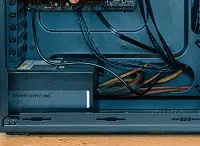
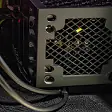
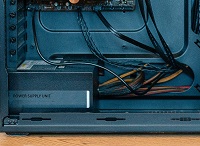
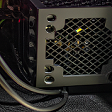
Desktop computers require a power supply unit (PSU) to convert AC power from the wall outlet into DC power that can be used by the computer's internal components. A desktop computer PSU typically ranges in power output from 300 to 1200 watts, with the most common wattages being between 400 and 800 watts. The wattage needed for a desktop computer PSU is determined by the power requirements of the internal components, including the CPU, GPU, hard drives, water pumps, radiators, fans and any additional hardware such as a sound card or optical drives.
When choosing a PSU for a desktop computer, it is important to ensure that it has the necessary wattage to power all of the components in the system, while also providing enough headroom for future upgrades. A PSU that is too weak for the system can cause stability issues or even damage to the hardware, while a PSU that is too powerful may waste energy and be more expensive than necessary.
PSUs are typically rated for efficiency using the 80 Plus certification system, which ranges from 80 Plus (basic efficiency) to 80 Plus Titanium (highest efficiency). A more efficient PSU will waste less energy as heat and will result in lower electricity bills over time.
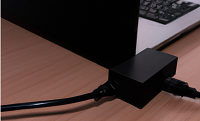
Power Adapters for Laptops: Laptops, on the other hand, typically do not have an internal PSU. Instead, they use a power adapter (brick) that converts AC power from the wall outlet into DC power that can be used by the laptop. Laptop power adapters are typically rated for output voltage and amperage, and are designed to provide the specific voltage and amperage required by the laptop's internal components.
When choosing a power adapter for a laptop, it is important to ensure that it provides the correct voltage and amperage, as using an adapter with the wrong specifications can damage the laptop's internal components. It is also important to choose an adapter that is compatible with the laptop's charging port.
Laptop power adapters come in a variety of sizes and shapes, with some designed for travel and others for use at a desk. Some adapters also include additional features, such as the ability to charge multiple devices at once or the ability to adjust the output voltage to support a wider range of devices.
In conclusion, power supplies are an essential component of any computing system, whether it's a desktop computer or a laptop. When choosing a power supply, it is important to ensure that it provides the necessary wattage or specifications to power all of the internal components, while also being efficient and compatible with the system.
How to pick a PSU based on recomendations from reputable sources.
Toms Hardware's best of 2023
|
[Free Research Preview. ChatGPT March 23 Version 2023]
|