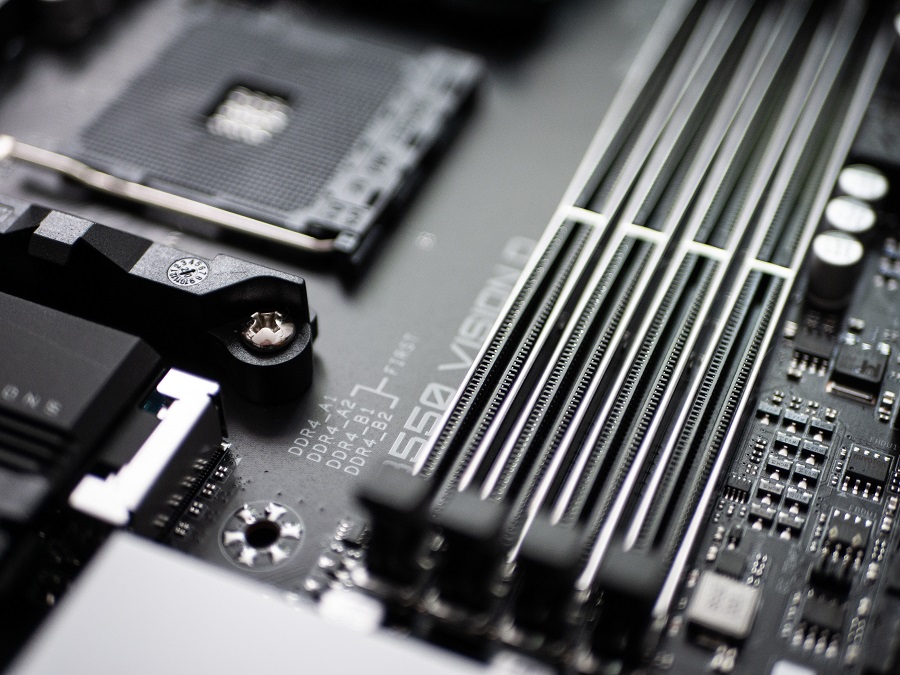
A simple motherboard typically has the basic features required to build a functional computer system.
However, there are many additional features that are available on more advanced motherboards that can provide a wider range of capabilities and improved performance Some of the most notable features that can be found on advanced motherboards include:
Overclocking support: Allows users to increase the clock speed of their beyond its standard clock speed, allowing for improved performance certain applications.
Multiple GPU support: Allows users to install multiple graphics cards the system, allowing for improved graphics performance and support for demanding applications such as gaming or 3D rendering. This is no longer the case for systems today.
High-speed data interfaces: Some motherboards support faster data such as USB 3.1 Gen 2 and Thunderbolt 3, which allow for faster transfer speeds and support for high-speed storage devices and peripherals.
Network interfaces: Advanced motherboards often have additional interfaces such as Gigabit Ethernet or Wi-Fi, which can provide connectivity and faster internet speeds.
Audio features: Some high-end motherboards include advanced audio such as high-definition audio codecs and audio software that improved audio quality and support for virtual 7.1 surround sound.
RGB lighting and customization: Some motherboards include RGB lightingwhich can be customized to match the color scheme of the system, or provide added visual effects.
Power delivery: Some motherboards feature enhanced power delivery, which provide more stable and reliable power to the CPU and other components.
BIOS and firmware features: Some motherboards include advanced features such as UEFI BIOS, fan control, thermal management and power-options, making the system easier to configure and maintain.
PCI connectivity: PCI slots determine whether your hardware components can be connected to the motherboard. Different cards require specific PCI slots for proper functioning.
Having ample and versatile PCI slots allows you to upgrade and add new hardware components to your system in the future without changing the entire motherboard.
The presence of suitable PCI slots enables users to install specialized hardware components required for their specific needs, such as graphics cards, sound cards, and network adapters.
The speed and generation of PCI slots can impact the performance of certain components. Choosing a motherboard with the latest PCI standards ensures optimal performance for modern hardware.
Investing in a motherboard with sufficient PCI connectivity ensures your system remains compatible with new hardware technologies and standards that emerge in the future.
Having ample and versatile PCI slots allows you to upgrade and add new hardware components to your system in the future without changing the entire motherboard.
The presence of suitable PCI slots enables users to install specialized hardware components required for their specific needs, such as graphics cards, sound cards, and network adapters.
The speed and generation of PCI slots can impact the performance of certain components. Choosing a motherboard with the latest PCI standards ensures optimal performance for modern hardware.
Investing in a motherboard with sufficient PCI connectivity ensures your system remains compatible with new hardware technologies and standards that emerge in the future.